



Buying a foreclosed home can be a smart investment. You could land a property below market value and instantly boost its worth through renovations. Even better, you don’t need to drain your savings to do it. The Federal Housing Administration (FHA) offers government-insured mortgages with flexible borrowing and low-upfront-cash requirements that can make purchasing a foreclosed home a reality for first-time buyers or anyone with credit woes.
But not every foreclosure qualifies for an FHA loan – and not all FHA loans make sense for a distressed property. So, how can you use an FHA loan to finance a foreclosed home? What are the benefits and challenges? We unpack it all right here.
Key Takeaways:
- FHA loans are government-insured loans that offer flexible borrowing qualifications (like lower credit scores and small down payments) for buyers.
- An FHA loan can be used to purchase a foreclosure, but the borrower and the property must meet the qualifications regarding credit score, down payment (3.5% with a credit score of 580) and debt-to-income ratio (typically, 43% or less).
- To finance a foreclosure with an FHA loan, the property must be approved by an FHA appraiser. If construction is necessary, an FHA consultant must oversee the work.
- There are two FHA loans that typically work well for foreclosed homes: the 203(b) and the 203(k).
- Repairs can be a roadblock when using FHA financing to purchase a foreclosure. Many are sold as-is, which means they might not meet the FHA’s minimum livability standards.
- The 203(k) can be a good workaround if renovations are needed, as it combines the cost of the home purchase and repairs into a single loan.
- FHA loans can take longer to close than other loans, which may be a challenge in a foreclosure purchase.
Can You Buy A Foreclosure With An FHA Loan?
A foreclosure occurs when a homeowner falls behind on their mortgage payments and the lender takes ownership of the property. Purchasing a foreclosed home could help you get a property below market price, which can help you build equity quickly.
While FHA loans can be used to purchase foreclosed homes, not all foreclosures are ideal for this type of mortgage. Foreclosure auctions, for example, are not the best fit for FHA loans because they tend to sell quickly and attract immediate, all-cash payments. In the rare case financing is permitted, the closing timeline on an FHA loan would be an obstacle in such a fast-paced environment. Also, loans insured by the FHA require homes to meet minimum property standards, which may omit some foreclosed properties from the running.
There are two types of distressed properties to consider with an FHA loan:
- Short sales: In this pre-foreclosure situation, the original owner is in default but still owns the property. In an effort to sell quickly and avoid foreclosure, they price the house below the remaining mortgage balance – with the lender’s permission.
FHA loans can work well in these circumstances because usually the owner still occupies the home. It’s likely in better condition than an abandoned foreclosure, so the property may have an easier time meeting the FHA’s standards.
Lenders have to approve short-sale transactions, but like homeowners, they may be more willing to work with you because they’re motivated to make the sale succeed. However, purchasing a short sale with an FHA loan could take longer than usual because of property inspections, extended paperwork, and red tape due to the lender’s involvement.
- Real estate owned (REO) property: Also called a bank-owned home, this type of property has gone through foreclosure and failed to sell at auction. At this point, the home is fully owned by the lender. The property has no liens and is sold as-is, so no repairs will be made before closing.
With this type of property, you may experience competition from investors and cash buyers, so the FHA approval/closing timeline may not work to your advantage. Still, the seller is usually motivated to unload the house and may list it at a low price. To close quickly, lenders may prefer a cash purchase, but strong offers are always welcome. REO properties are often in need of some renovation, making an FHA 203(k) loan, which finances renovations, a good option.
Compare Mortgage Offers From Verified Lenders:
Which FHA Loan Is Best When Purchasing A Foreclosed Home?
The Federal Housing Administration offers several types of loans to help first-time buyers or credit-challenged borrowers enter the world of homeownership. When it comes to a foreclose, however, the most commonly used FHA loans are the 203(b) and the 203(k). Here’s how each one works:
Financing A Foreclosed Home With An FHA 203(b)
The standard FHA mortgage, the 203(b) helps first-time or cash-strapped buyers purchase homes. Like all FHA loans, 203(b) loans are insured by the government, so if a borrower defaults, the FHA covers the loss for the lender. Given that lenders assume less risk, they have less stringent borrowing requirements than those for conventional loans, including lower credit score and down payment thresholds (500 – 579 requires 10% down; 580 and higher requires 3.5% down). It’s available with a fixed or adjustable interest rate for a 15- or 30-year term.
However, due to that insurance, borrowers must pay upfront and annual mortgage insurance premiums (MIP), which add to the cost of the loan. The upfront premium is 1.75% of the loan and is typically paid at closing, though you do have the option of rolling it into your balance, which is added to your monthly mortgage payment. Keep in mind that then it would be added to the loan principal. The annual premium varies based on the size and terms of the loan, and it gets folded into your monthly mortgage payment. For borrowers who put down less than 5%, the annual fee is 0.55% of the current loan amount. Homebuyers who put down less than 10% will have MIP fees for the life of the loan. However, homeowners who make a down payment of 10% or more may have their MIP canceled after 11 years.
Many foreclosed homes are offered below market value, and between the reduced costs and the 203(b)’s low-down-payment requirements, this loan can make owning a foreclosed home possible without tying up a lot of cash. FHA loans, however, do have limits, which are updated each year. For 2026, in low-cost areas, you can borrow up to $541,287; in high-cost areas, the limit rises to $1,249,125.
One caveat: The 203(b) requires an appraisal by an FHA-approved appraiser. The appraiser will inspect the property to ensure it meets the FHA’s minimum livability standards. The property must be safe and structurally sound, which could make getting approval on a neglected foreclosed home difficult. On the other hand, if it does meet the FHA’s criteria, you can feel more confident in your purchase.
When To Finance A Foreclosed Home With An FHA 203(k)
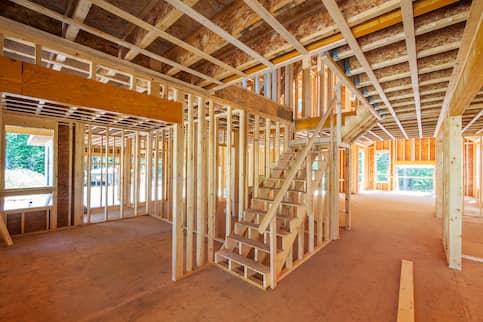
Also called a rehab or renovation loan, the 203(k) is a government-insured loan that wraps the cost of a home purchase and renovations into a single mortgage. It carries the same terms and flexible borrowing requirements as the 203(b), making it more accessible to a wider range of borrowers. If a foreclosed home needs renovating, it can help you cover the cost.
The FHA 203(k) provides financing beyond the home purchase. The balance is put in escrow, which is used to pay contractors at various stages throughout the project. Given that foreclosed homes are often neglected or in need of major repairs, this loan can prove especially useful as it allows you to finance renovations without depleting your savings. It may also make it possible to purchase a property that doesn’t immediately meet the FHA 203(b)’s minimum livability standards.
The 203(k) comes in two forms. The standard is for major renovations (projects exceeding $75,000 and costing at least $5,000), and the limited is for minor repairs (up to $75,000). It shares the 203(b)’s loan limits, and as with the 203(b), it’s for primary residences, so you’ll have to plan to live in the house. You can finance necessary repairs with this loan (although not luxury items, like a pool or tennis court), and if you’re buying a foreclosed home sold as-is, you can use it to cover a lot of the refurbishing.
The downside is that to close, this loan requires more time and paperwork than usual. Along with financial documents, you’ll have to supply the lender with construction bids, licenses, project outlines, and other project-specific reports. You’ll also have to hire a HUD-approved consultant who will appraise the home to determine its post-renovation value and approve each stage of construction as it comes to fruition. The FHA also mandates specific construction start and stop times with this loan: Projects must start within 30 days of closing and be completed within 9 or 12 months.
What’s Your Goal?

Buy A Home
Discover mortgage options that fit your unique financial needs.

Refinance
Refinance your mortgage to have more money for what matters.

Tap Into Equity
Use your home’s equity and unlock cash to achieve your goals.
How To Buy A Foreclosed Home With An FHA Loan
You have to meet both borrower requirements and property requirements to buy a foreclosed home with an FHA loan. Here’s what to expect in both categories.
Borrower Requirements For An FHA Loan
FHA borrower requirements include the following:
- Credit score: Some lenders will accept a credit score as low as 500 for an FHA loan, while others require a score of at least 580.
- Down payment: Your minimum down payment is dictated by your credit score. With a score of 500 – 579, you’ll need to put down 10%. That requirement drops to just 3.5% if your score is 580 or higher.
- Debt-to-income ratio (DTI): Your DTI reflects the amount of monthly debt payments (including a mortgage) in relation to your monthly gross income. Most lenders require a DTI of 43% or lower to qualify for an FHA loan. Some lenders allow for DTIs of up to 50% with strong compensating factors, like a dependable, high income.
Taking out an FHA loan for a foreclosure comes with some additional financial commitments as well. This type of mortgage requires you to pay upfront and annual mortgage insurance premiums. You’ll pay 1.75% of the loan amount at closing, plus an annual premium that rolls into your monthly mortgage payment. The annual rate ranges from 0.15% – 0.75% of the mortgage balance and is split among your 12 payments for the year. If you’re financing with a 203(k), you’ll also have to pay for a HUD-approved consultant to oversee the project ($300 and up), and you may need to allow for contingency reserves (up to 20% of the cost of repairs) to cover unexpected overruns.
Home Requirements For An FHA Loan
Getting an FHA loan for any home purchase, including a foreclosed home, requires you to use the property as your primary residence for at least a year. On top of that, the home must meet livability standards requiring the property to be safe, sanitary and structurally sound. In normal transactions, the seller might take care of any required repairs before closing. But bank-owned properties and short sales are usually sold as-is, so the home must meet minimum standards at the time of the sale.
Specific minimum property standards for an FHA loan include:
- Working home systems and appliances, such as electrical, plumbing, heating and cooling
- Ventilated basements and crawl spaces with no visible damage or structural problems
- Working bathroom fixtures
- Attached and safely functioning exterior doors and access points
- Paint with less than 0.06% lead content — chipping, peeling and flaky paint on homes built before 1978 will be presumed to contain lead and the situation must be rectified before closing
These standards are evaluated in an FHA-approved appraisal, along with the property value. The appraised value should be greater than or equal to the sale price.
Ready To Become A Homeowner?
Get matched with a lender that can help you find the right mortgage.
Pros And Cons Of Buying A Foreclosure With An FHA Loan
There are both advantages and disadvantages to buying a foreclosed home with an FHA loan. Here’s a brief overview.
| Pros: | Cons: |
|---|---|
| Low minimum down payment so you can spend less cash up front | Could be challenging for a foreclosed home to meet FHA minimum property standards |
| Flexible credit score requirements so homeownership is accessible to more borrowers | Foreclosures are often sold as-is, so a home may need repairs that sellers aren’t willing to make |
| Potential to buy a foreclosure at a below-market price so you can build equity faster | Potential competition from cash buyers or investors, who can move fast |
| More confidence in your purchase if a property meets FHA property standards | Extra steps such as appraisals and repair inspections |
| You can renovate and increase a home’s value right away | Closing can require additional paperwork with an FHA 203(k) loan |
| The opportunity to combine the home purchase and renovations into a single loan | More risk with a foreclosed property |
| Potential for lower interest rates than you’d get with other types of loans | Foreclosure availability can be limited |
| Mortgage insurance premiums add to closing costs and monthly payments | |
| Lenders and sellers may have to approve the deal, creating extra hoops to jump through and a longer buying/closing process |
Take The First Step To Buying A Home
Find a lender that will work with your unique financial situation.
How To Find Foreclosed Homes For Sale
Where should you look for foreclosed homes available for purchase? Most online real estate platforms include foreclosures in their listings, including Redfin and Realtor.com. Also check out specialty websites like Foreclosure.com, Auction.com and RealtyTrac. The HUD Home Store also offers listings owned by the Department of Housing and Urban Development (HUD).
Local real estate agents can also be a good resource, especially those who specialize in foreclosures. Your local government websites may also list upcoming auctions and foreclosure notices to help widen your search.
It can take time to find the right foreclosure and submit an acceptable offer. But staying on the hunt prepares you for when the right property does appear.
FAQ
The Bottom Line: FHA Loans Offer Low-Cost Foreclosure Financing
Using an FHA loan to buy a foreclosure can help you get a property without a huge down payment, even if you have a below-average credit score. But you’ll need to narrow your search to foreclosed homes in good condition for a standard 203(b) loan, or apply for a 203(k) if the home warrants major construction. Most bank-owned properties and short sales are sold as-is, so you can’t count on the sellers to take care of repairs before closing. If you do find a well-kept home that’s in foreclosure, you could get a good deal and set yourself up to build equity from day 1.
Wondering how much to spend on a foreclosure? Check out the latest FHA mortgage rates.


Lauren Bowling
Lauren Bowling is an award-winning blogger and finance writer whose work has been featured on The Huffington Post, Fox Business, CNBC, Forbes, Business Insider, Redbook and Woman’s Day Magazine. She writes regularly at financialbestlife.com.