Are you concerned that your credit score may be too low to qualify for a home loan? Or that you won’t be able to come up with enough money to cover a down payment to buy a home?
An FHA loan may be a good fit. What is an FHA loan? It’s a home loan insured by the Federal Housing Administration, designed to help people with less-than-stellar credit qualify for financing to purchase a home. FHA loans also have lower down payment requirements.
Read on to learn more about FHA loans and to see if it’s an ideal type of home loan for your situation.
Key Takeaways:
- FHA loans are backed by the Federal Housing Administration, which allows lenders to loosen eligibility requirements.
- FHA loans can offer more affordable monthly payment requirements compared to conventional loans if you have a low credit score and don’t have much saved for a down payment.
- FHA loans can have down payment requirements as low as 3.5%.
What Is An FHA Loan And How Does It Work?
The Federal Housing Administration insures FHA loans. Since they pose less risk to lenders, they have less strict eligibility requirements. FHA loans differ from conventional loans.
While the government insures FHA loans, it doesn’t originate them. If you decide to apply for an FHA loan, you’ll work with a private mortgage lender. You can qualify for an FHA loan with a lower credit score than most lenders require for a conventional mortgage.
FHA loans also require a low down payment, making them a good fit for borrowers with limited savings for a down payment. You can also roll your FHA loan closing costs into your loan amount, meaning you won’t have to pay as much up front. However, in that scenario, you’ll pay interest on those closing costs, so your monthly payments would increase.
These home loans have specific requirements, including for the property you intend to buy.
Compare Mortgage Offers From Verified Lenders:
What Type Of Borrower Is An FHA Loan Best For?
An FHA loan may appeal to first-time home buyers with lower credit scores who can’t afford a sizable down payment. Your credit score typically needs to be over 620 to qualify for a conventional loan, but you may qualify for an FHA loan with a score as low as 500. You can also still qualify for an FHA loan if you’ve faced financial hurdles like bankruptcy.
How Do I Qualify For An FHA Mortgage?
Here are the basics of FHA loan requirements:
FHA mortgage loan limits: Every year, HUD sets FHA loan limits, which dictate how much you can borrow. For 2025, the FHA loan limit for a 1-unit property is $524,225 in most areas and $1,209,75 in high-cost areas. The ceiling for FHA loans in Alaska, Hawaii, Guam and the U.S. Virgin Islands is $1,814,625, to account for higher construction costs.
Credit score: Applicants with credit scores as low as 500 can qualify for an FHA loan. However, many lenders set their own minimum credit score requirements.
Down payment: FHA loans have low down payment requirements. If your credit score is at least 580, the minimum down payment for an FHA loan is 3.5%. If your credit score is between 500 – 579, you must provide a minimum down payment of 10% of your home’s purchase price.
Debt-to-income ratio: Lenders check your debt-to-income ratio (DTI) when deciding if you can afford a mortgage. DTI compares your pretax monthly debt to your pretax earnings. You can calculate your DTI by adding up all your monthly debt payments and dividing them by your gross monthly income. Then multiply this number by 100. Applicants should have a DTI no higher than 43% to qualify for an FHA loan. In some cases, applicants with a DTI ratio above 43% may qualify for an FHA loan if they have a high credit score or significant cash reserves.
FHA appraisal: Before closing, you must get a home appraisal by an FHA-approved appraiser. The appraiser will ensure the home meets safety standards and determine the home’s current market value. Your lender won’t let you borrow more than the home is worth. This appraisal lets your lender confirm that you aren’t overpaying for your new home.
FHA minimum property standards: Homes purchased using FHA loans must meet specific minimum property standards related to safety, security and soundness. FHA-approved appraisers will consider these requirements while inspecting the home you plan to buy. If an inspection finds serious structural issues, for example, you may be unable to use an FHA loan to buy the house unless the seller makes necessary repairs.
FHA mortgage insurance: With an FHA loan, you must pay up front and annual mortgage insurance premiums (MIPs). Mortgage insurance protects your lender if you stop making payments. Your upfront mortgage insurance premium is paid at closing, totaling 1.75% of the loan amount. Annual MIPs are percentage-based and vary depending on a borrower’s situation. The standard amount for most FHA mortgages is a 0.55% annual MIP.
What’s Your Goal?

Buy A Home
Discover mortgage options that fit your unique financial needs.

Refinance
Refinance your mortgage to have more money for what matters.

Tap Into Equity
Use your home’s equity and unlock cash to achieve your goals.
Types Of FHA Loans:
FHA 203(b) Loan
The FHA 203(b) loan is the basic, most commonly used FHA loan to buy a home. It covers the following:
- It can be used to buy a primary residence with 1 to 4 units.
- The minimum down payment is 3.5% of your home’s purchase price with a credit score of 580 or higher or 10% with a credit score of 500 to 579.
- An FHA-approved appraiser must determine your home’s current market value and whether it meets all FHA safety standards.
FHA 203(k) Rehabilitation Loan
If the home you’re buying needs significant repairs, you can apply for the FHA’s 203(k) rehabilitation mortgage, which is a type of FHA construction loan. This loan can help you finance both the home’s purchase price and renovation costs.
For example, if a home costs $200,000 and a licensed contractor estimates renovations will cost $30,000, you’d take out an FHA 203(k) rehab mortgage of $230,000. It carries these requirements:
- The home you’re buying must be at least 1 year old.
- The costs of improvements and repairs must be at least $5,000.
- You must work with a licensed contractor on a rehab plan that lists the estimated costs of repairs.
FHA Construction-To-Permanent Loan
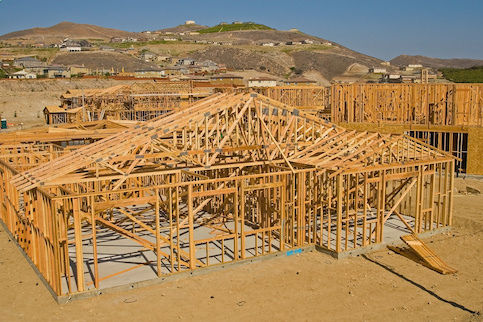
An FHA construction-to-permanent loan can help you finance a new-home build. You will finance the purchase of the land it will sit on, home construction costs and the permanent mortgage you’ll take out to pay for the new property.
Once construction is finished, this loan will automatically convert to a regular mortgage loan that you’ll pay back with interest via monthly installments. It follows these rules:
- This loan requires just one closing date, meaning you pay closing costs only once.
- You must work with a licensed contractor to construct your home.
- An appraisal is required to confirm that the home you’re building meets the minimum property standards.
FHA Energy Efficient Mortgage Program
If you want to make your current home more energy-efficient or add energy-efficient features to a home you’re buying, consider an FHA Energy Efficient Mortgage. You’d apply for a mortgage larger than the home’s purchase price and use the extra funds to fund energy-efficient updates.
- You must work with a qualified home energy professional to identify the energy-efficient measures that work best for your home.
- The FHA will approve only updates that it considers cost-effective.
FHA Cash-Out Refinance
An FHA cash-out refinance enables you to refinance your current mortgage to a new loan insured by the FHA. Your new loan will total more than what you owe on your current mortgage – how much more depends on the equity you’ve built in your home. You’ll receive the extra money as a lump sum that you can spend however you want, such as on home repairs or debt consolidation.
- An FHA-approved appraiser must appraise the property to determine its current market value.
- You can borrow up to a certain percentage – typically 80% – of your home’s appraised value.
- You must meet credit score and DTI requirements.
FHA Streamline Refinance
An FHA Streamline refinance may be an option if you want a quick refinance with minimal paperwork requirements. It involves refinancing an existing FHA-insured mortgage to another FHA loan to achieve a net tangible benefit, such as a shorter loan term, a lower interest rate or a lower monthly payment.
- The FHA must already insure the loan you are refinancing.
- The FHA must also insure your new loan.
- You must be current on your mortgage payments.
- This type of loan generally doesn’t require an appraisal.
Take The First Step To Buying A Home
Find a lender that will work with your unique financial situation.
FHA Loans Pros And Cons
As with all mortgage types, it’s essential to consider the various pros and cons of FHA loans:
| Pros Of FHA Loans | Cons Of FHA Loans |
|---|---|
| FHA loans have low down payment requirements. | Mortgage insurance is required. |
| They have flexible credit score requirements. | If you have a low credit score, you may get charged a higher interest rate. |
| They offer competitive interest rates. | There are strict property standards. |
| You can roll closing costs into your monthly payment. | The loan limits can be restrictive. |
| For borrowers with low credit scores, they can be cheaper than conventional loans. | For borrowers with good credit, they may be more expensive than conventional loans. |
How To Apply For An FHA Loan
Now that you have a better understanding of what an FHA loan is, you may be ready to apply.
To start the process, use this tool from the U.S. Department of Housing and Urban Development (HUD) to find an FHA lender. If you have specific questions about FHA loans, call a HUD housing counselor at 800-569-4287.
FAQ
If you’re considering an FHA mortgage, check out these common questions – and answers – about FHA loans:
These refinances require less paperwork and usually close faster.
The Bottom Line: An FHA Loan Could Be Right For You
While an FHA loan isn’t the right fit for every borrower, it can be a good option for home buyers with lower credit scores and limited savings. Its flexible requirements make homeownership more accessible for people who might otherwise have a difficult time buying a home.
The U.S. Department of Housing and Urban Development (HUD) recently announced new loan limits for Federal Housing Administration (FHA) loans. Below are the 2026 FHA loan limits for low-cost and high-cost areas. Limits in areas like Alaska, Hawaii, Guam, and the U.S. Virgin Islands are higher.
Low-cost areas
1-unit: $541,287
2-unit: $693,050
3-unit: $837,700
4-unit: $1,041,125
High-cost areas
1-unit: $1,249,125
2-unit: $1,599,375
3-unit: $1,933,200
4-unit: $2,402,625


Ben Shapiro
Ben Shapiro is an award-winning financial analyst with nearly a decade of experience working in corporate finance in big banks, small-to-medium-size businesses, and mortgage finance. His expertise includes strategic application of macroeconomic analysis, financial data analysis, financial forecasting and strategic scenario planning. For the past four years, he has focused on the mortgage industry, applying economics to forecasting and strategic decision-making at Quicken Loans. Ben earned a bachelor’s degree in business with a minor in economics from California State University, Northridge, graduating cum laude and with honors. He also served as an officer in an allied military for five years, responsible for the welfare of 300 soldiers and eight direct reports before age 25.