





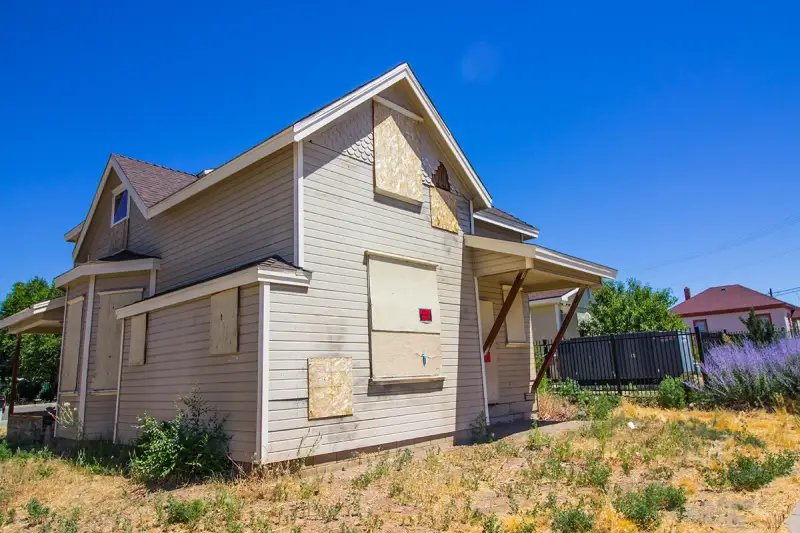
In competitive housing markets, it’s common for sellers to receive multiple offers, often above the asking price, which can be discouraging for first-time home buyers. How are you supposed to compete or afford a home at all when you may need to make an offer over asking?
To break into the market, some home buyers might consider purchasing what’s known as a “distressed property.” These homes are often, although not always, sold below market value, which can make them appealing for budget-conscious buyers.
Two of the most common types of distressed property sales are short sales and foreclosures. Understanding how these two types of home purchases work can help you determine if pursuing a short sale or a foreclosure is right for you.
Key Takeaways:
- Home buyers can purchase distressed properties through short sales or foreclosures.
- A short sale lets the current homeowner prevent foreclosure by selling the property for an amount lower than their current mortgage balance.
- A foreclosure sale is typically a public auction, held after the current homeowner has defaulted on their mortgage and the lender takes possession of the property.
- Both short sales and foreclosures typically require buyers to purchase the property “as is” and can take many months for the approval and closing process.
What Is A Distressed Property?
Though the term may conjure up images of houses with doors hanging off their hinges, a distressed property generally refers to a home in or at risk of foreclosure, or otherwise in financial distress, which may lead to repossession by the lender.
A home most commonly ends up in foreclosure because the homeowner has defaulted on the mortgage. Many lenders define defaulting as three missed mortgage payments or 90 days’ worth of missed payments. A mortgage contract typically creates a lien on the property, allowing the lender to seek control of the property should the borrower stop making mortgage payments.
If the original borrower defaults on the mortgage, the lender may want to sell the distressed property quickly to try to recoup its losses. It may do this in several ways, including a short sale or foreclosure.
Compare Mortgage Offers From Verified Lenders:
What Is A Short Sale In Real Estate?
In a short sale, the lender agrees to let the current homeowner sell the property for an amount that is lower than the mortgage balance they owe. This can be an attractive option for a struggling borrower who is underwater in their mortgage, since it allows them to get out of their mortgage without having to go through foreclosure, which can be much more damaging to their credit.
A short sale is also usually less expensive than foreclosure for the lender because it often requires less time and the lender typically incurs fewer costs compared to a foreclosure. After the sale, the lender can choose to discharge, or forgive, the rest of the mortgage the homeowner owes, or the lender may require the homeowner to repay all or a portion of the unpaid balance.
Typically, either a real estate agent or the owner of the property will conduct a short sale. For potential buyers, a short sale purchase might offer an opportunity to purchase a property in relatively good condition at a good price. However, home buyers interested in purchasing a distressed home via short sale likely will want to partner with a real estate agent who specializes in these kinds of atypical sales and help navigate and expedite the process.
Although you may be working with a real estate agent and the owner of the property in a short sale, buyers are ultimately negotiating with the lender or bank on the price. Even if the owner accepts your offer, the lender has the power to accept or reject it. This process can be even more complex if multiple lenders are involved, such as when the homeowner has both a primary mortgage and a home equity loan.
Buyers must be aware that most short sales require the buyer to take the home “as is.” The lenders are not typically interested in negotiating with you over changes or fixes to the home to reach an agreement since they are already taking a loss on the property.
What’s Your Goal?

Buy A Home
Discover mortgage options that fit your unique financial needs.

Refinance
Refinance your mortgage to have more money for what matters.

Tap Into Equity
Use your home’s equity and unlock cash to achieve your goals.
What Is A Foreclosure Sale?
A foreclosure sale occurs after a homeowner has defaulted on their mortgage loan. In many cases, lenders begin the foreclosure process after three months of missed mortgage payments, although this varies by the lender and location.
Once the lender has foreclosed on the property, it is sold at public auction to the highest bidder. Often, with these sales, prospective buyers don’t have the right to inspect the property before bidding. That means in many cases a buyer won’t know the true condition of a foreclosed home until after the purchase.
The lender who foreclosed on the property typically turns in the highest bid at a foreclosure sale. The lender has the right to take the amount it is owed on the mortgage and use that to place a “credit bid.” If the lender’s bid is accepted, it does not need to pay itself in cash in order to acquire the title, subject to any surviving liens. Once the lender has the title, it can then inspect the property and fix it up, usually with the intent to sell the house as a real estate owned property or REO.
A buyer interested in purchasing the foreclosed property would need to place a bid higher than the foreclosing lender’s credit bid to have a chance at the property. Many buyers are leery of bidding too much for a home they haven’t inspected.
Ready To Become A Homeowner?
Get matched with a lender that can help you find the right mortgage.
Buying A Property Via Short Sale
The process of purchasing a home via short sale is different from a typical home buying experience. Here’s what to know if you’re considering making a short sale purchase:
- Work with an experienced real estate agent. An agent can help you navigate the complex process of a short sale, including assessing the property’s value and helping you submit your offer in writing to the seller’s mortgage lender.
- Back up your offer with comps. While short sales allow home buyers the opportunity to get a deal on a house, that doesn’t mean you can make a lowball offer that’s well below market value. Your offer should include information about comparable sales in the area to show that the price you’re willing to pay is reasonable for the neighborhood. This will increase the likelihood that the lender will accept your offer.
- Expect the process to take a long time. While the average amount of time to close on a typical home purchase is anywhere from 30 to 45 days, a short sale can take as long as a year to close after you’ve submitted your offer. That’s because the seller’s lender needs to approve the sale, not just the seller, and that becomes even more complicated if there is more than one mortgage on the property. The National Association of Realtors estimates that approval from a single lender takes approximately 2 months, and the process can take 4 months or longer if there are multiple lenders involved. (Timeframes fluctuate by market cycle.)
Buying a house via short sale is much more difficult if you include contingencies in your offer. The lender is less likely to agree to requests for flexibility, such as your need to sell your home before you can close on the short sale.
Take The First Step To Buying A Home
Find a lender that will work with your unique financial situation.
Buying A Foreclosed Home
You can purchase a foreclosed home at auction, either at a standard foreclosure sale or at a government-owned property auction. At government-owned property auctions, agencies like the U.S. Department of Housing and Urban Development or the Department of Veterans Affairs (VA) auction off homes with defaulted FHA or VA mortgages.
It’s also possible to purchase a foreclosed property as an REO home. These are the homes that the foreclosing lender bought back at auction. The lender then cleared the lien, fixed any problems and listed the property for sale, usually with a local real estate agent.
The process for purchasing an REO property is similar to a standard home purchase. That means you can inspect the property before making an offer and that prices on REO homes are likely higher than those on homes sold at foreclosure auctions.
Buying a foreclosed property can be a lengthy process depending on the specific type of foreclosure purchase you’re making. Purchasing a foreclosure at auction will be the quickest option, but you will typically need to accept the property “as is” and pay in cash, which means you must have already saved up a significant amount of money prior to making your bid. Just remember the major risk of buying an “as is” foreclosure: You can’t know for certain if there are liens on the property or necessary repairs until you have completed the sale. That said, buyers can perform a title search before bidding (though that’s not always practical at auction).
REO sales are more suited to traditional financing, which means you can take steps to get pre-approved for a mortgage while you are shopping around for the home you want. However, you must still account for the time it takes to get your financing in order and the time it takes for the bank (the seller) to respond to your purchase offer. Since you are not negotiating with a traditional seller, this may affect the timeline of your purchase.
Short Sale vs. Foreclosure: FAQ
If you’re interested in either a short sale or foreclosed property, the answers to the following common questions can help.
Bottom Line: Short Sales And Foreclosures Are Inexpensive And Come With Significant Risks
While purchasing a distressed property via short sale or foreclosure could potentially save you money or get you into a neighborhood you couldn’t previously afford, the process comes with potential major drawbacks. These include purchasing a house “as is,” without an inspection, and a long approval and closing process.
If you’re excited by the idea of buying a home for a low price at auction and the drawbacks are not an issue, then a short sale or foreclosure sale may work for you. If you’d like to reap the benefits of purchasing a distressed property without having to worry about the potential downsides, an REO home sale might be the best fit.
No matter which method you choose, you can improve your chances of getting your offer accepted by getting your financing in order ahead of time. Lenders typically prefer to work with cash buyers, but having a hefty down payment and pre-approval for a loan would make your offer more attractive for short sales, foreclosure auctions and REO sales.


Ben Shapiro
Ben Shapiro is an award-winning financial analyst with nearly a decade of experience working in corporate finance in big banks, small-to-medium-size businesses, and mortgage finance. His expertise includes strategic application of macroeconomic analysis, financial data analysis, financial forecasting and strategic scenario planning. For the past four years, he has focused on the mortgage industry, applying economics to forecasting and strategic decision-making at Quicken Loans. Ben earned a bachelor’s degree in business with a minor in economics from California State University, Northridge, graduating cum laude and with honors. He also served as an officer in an allied military for five years, responsible for the welfare of 300 soldiers and eight direct reports before age 25.